Industrial heating processes often require precise temperature control. Rapid heat delivery
Industrial heating processes often require precise temperature control, rapid heat delivery, and minimal interruption to production. For applications involving short heating cycles or high-intensity radiant energy, shortwave infrared (IR) heaters offer a suitable heating option.
However, selecting the right heater involves more than checking its wattage or dimensions. Industrial buyers must consider material compatibility, wavelength, heating distance, equipment configuration, and operating requirements.
If you are looking for a shortwave IR heater supplier in India, here are the key applications, selection factors, and considerations to understand before sourcing.
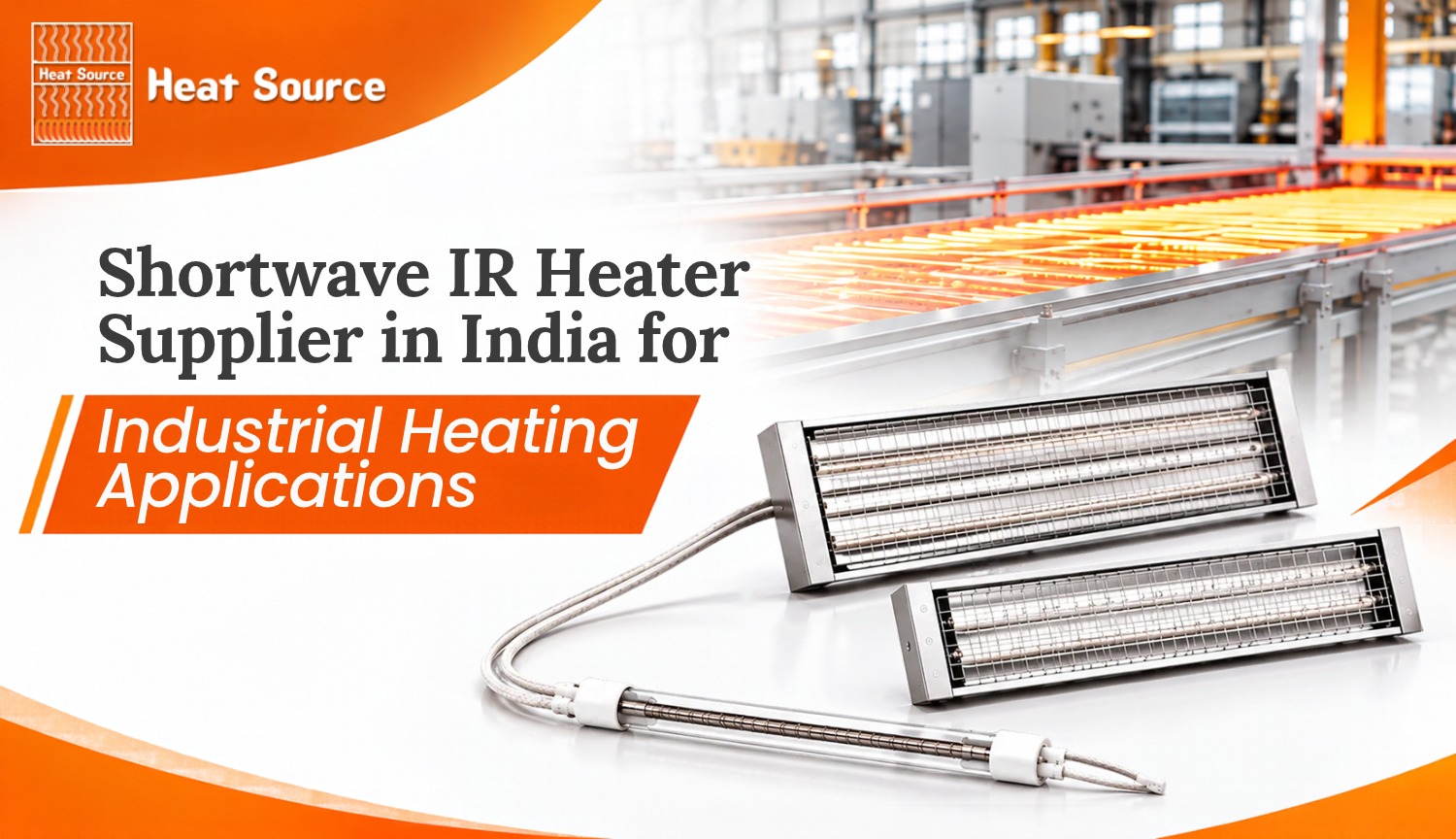
Shortwave infrared heaters are electrical heating elements that generate high-intensity infrared radiation, typically using a tungsten filament enclosed in a quartz tube. They generally operate in the shortwave wavelength range of approximately 0.78–1.4 microns.
Unlike conventional heating systems that primarily heat the surrounding air, infrared heaters transfer radiant energy directly to materials that absorb the emitted radiation.
Their key characteristic is a rapid heating response. Depending on the heater design, they can reach operating output within seconds, making them suitable for applications requiring quick thermal adjustments and short production cycles.
The right supplier should understand the technical requirements of your machinery and help you identify a compatible heating element.
Here are six important factors to evaluate:
Check the heater's wattage, voltage, heated length, overall dimensions, and wavelength range. These details determine whether the product is suitable for your equipment.
A supplier should understand the heating requirements of different industrial processes, including plastic processing, coating, printing, and drying.
Different materials absorb infrared energy differently. Confirm that the heater's wavelength is appropriate for the material and the required heating outcome.
If you are purchasing a replacement heater, share the existing model number, photographs, dimensions, electrical ratings, and connection details. Similar-looking heaters may have different operating characteristics.
For production-dependent machinery, sourcing timelines matter. Discuss product availability, procurement lead times, order quantities, and replacement requirements before confirming an order.
A supplier who can guide you on heater positioning, reflector arrangements, temperature control, and practical equipment adjustments can help you make a more informed selection.
Before requesting a quotation, prepare the following information:
Sharing these details helps the supplier assess the application and recommend a suitable heater configuration.
Heat Source provides industrial heating solutions for manufacturers across different process applications. With experience in industrial heating technologies, the team assists buyers in identifying suitable products based on machinery specifications and operational requirements.
Heat Source focuses on:
Shortwave infrared heaters are an important option for industrial processes that require rapid radiant heating and responsive temperature control. However, their performance depends on selecting the right wavelength, electrical rating, and configuration for the material and machinery.
Working with an experienced shortwave IR heater supplier in India can help industrial buyers evaluate these requirements and source products suited to their production needs.
Looking for a shortwave infrared heating solution? Get in touch with Heat Source to discuss your application and technical requirements.
Shortwave infrared heaters are used for rapid heating in applications such as PET preform heating, paint curing, printing ink drying, plastic processing, textile treatment, and industrial preheating.
Shortwave infrared heaters typically operate in the approximate wavelength range of 0.78–1.4 microns, although the exact emission spectrum depends on the heater design.
Consider the material, required temperature, wavelength, wattage, voltage, heating area, installation distance, and production cycle before selecting a heater.
Yes. They can be integrated into continuous production systems when the heater, controls, cooling arrangements where required, and operating conditions are appropriately designed.
Share the application, material, existing heater specifications, electrical requirements, dimensions, operating temperature, and installation details to help determine a suitable product.